You Made the Vibe, Now Watch It Leave Without You
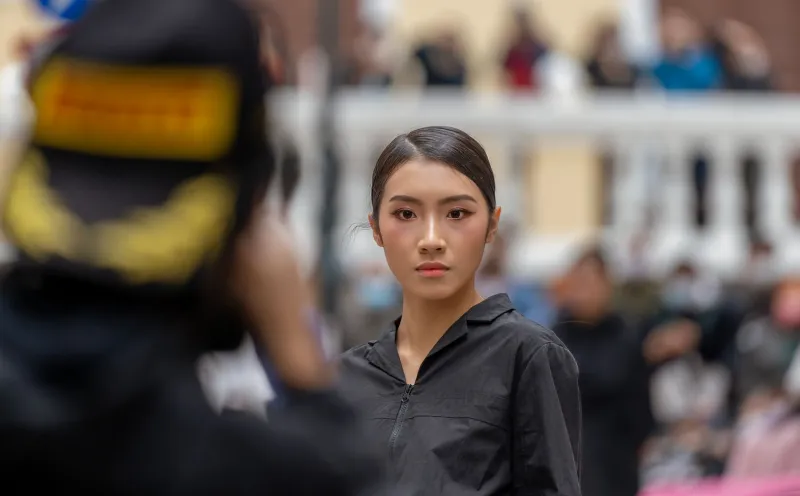
Somewhere in 2019, a handful of teenagers on Tumblr and Depop were layering thrifted slip dresses over long-sleeve shirts, pinning their hair with butterfly clips from the dollar bin, and calling it nothing — because it wasn't a thing yet. It was just how they dressed. It was personal. It was theirs.
By 2022, that same aesthetic had a name, a Pinterest board with forty million saves, a SHEIN drop, and a Vogue feature calling it "the defining look of a generation." The teenagers who invented it? They'd already moved on — quietly, without announcement, the way you leave a party when it stops being fun.
This is the cycle. And it's accelerating.
The Anatomy of Aesthetic Theft (That Isn't Technically Theft)
Let's be clear about something uncomfortable: nobody legally owns a vibe. You can't copyright a color palette or trademark the specific way you safety-pin a vintage blazer. The mechanisms that allow mainstream culture to absorb niche creative expression and spit it back out as product are entirely legal, largely invisible, and absolutely relentless.
What happens is more insidious than theft. It's more like digestion. A creator — usually young, usually from a marginalized community, often operating with limited resources — develops something genuinely expressive. It fills a gap. It resonates with people who feel the same kind of specific. It builds a community around shared recognition.
Then a brand's trend forecaster spots it. Or a mid-tier influencer adopts it for reach. Or an algorithm decides it's the moment and starts pushing it to people who have none of the context. The aesthetic gets named, tagged, and filed. Once it has a name, it has a market. Once it has a market, it has a shelf life.
The creator watches their thing become everyone's thing — and then, inevitably, no one's thing.
Grief Doesn't Have a Good Hashtag
What the trend cycle discourse rarely addresses is the emotional reality for the people at the origin point. There's a genuine mourning process that happens when your authentic expression gets mass-adopted, and it doesn't map neatly onto gratitude or flattery.
Talk to any bedroom pop producer who watched their lo-fi aesthetic become a Spotify playlist genre marketed to college students studying for finals. Or the DIY fashion kids from South Central or Brooklyn whose patchwork denim and hand-painted jackets ended up on a rack at Urban Outfitters six months later. The feeling isn't pride. It's closer to estrangement — like something you made to feel less alone in the world has been repurposed to make someone else's quarterly numbers.
Cultural theorists have a term for this: aesthetic gentrification. The original community gets displaced — not from a physical space, but from the creative one they built. The neighborhood changes. The rent goes up. They can't afford to stay in their own aesthetic anymore because staying means being lumped in with the diluted version, and that feels worse than leaving.
So they leave. They innovate again. They build something new in a quieter corner of the internet. And the cycle begins again.
The Speed Problem
Here's what's different now versus, say, the punk-to-Hot Topic pipeline of the early 2000s: the time between origin and homogenization has collapsed almost completely.
Trend forecasting used to take months. Street style photographers would document what was happening in specific cities, editors would deliberate, brands would produce. There was enough lag time that subcultures could develop real depth before the mainstream found them.
Now, a TikTok post can go from niche community to brand mood board in seventy-two hours. Microtrends are born and buried within a single season. The algorithm doesn't just accelerate discovery — it actively flattens context, strips meaning, and delivers aesthetics to audiences who have no relationship to their roots. What took punk five years to lose, cottagecore lost in about eight months.
For creators, this compression is brutal. There's almost no window anymore between making something genuine and watching it become content fodder. The internet rewards visibility, but visibility is what triggers consumption. It's a trap with no clean exit.
Can You Stay Ahead of It?
Some creators try. There's a whole strategic layer to how certain artists and designers manage their output — releasing work in limited quantities, keeping it off major platforms, building intentional friction into discovery. The logic being: if the machine can't easily access it, the machine can't easily eat it.
But this approach has its own costs. Staying underground means staying small. And for a lot of creators — especially those who need their work to generate income — small isn't sustainable. The choice between protecting your aesthetic and paying your rent isn't really a choice.
Others take a different approach: radical evolution. Move faster than the trend cycle can follow. By the time the mainstream catches up to what you were doing, you're already three moves ahead, doing something they won't understand for another two years. This is exhausting, but some creators genuinely thrive in it — treating their work as a living thing that has to keep growing or die.
And then there are the creators who have made a kind of peace with impermanence. Who understand that their role in the culture is generative — that they are, by nature, the people who make the new thing — and that the new thing will always eventually be taken. The grief is real. But so is the capacity to make something else.
What Gets Lost in Translation
The part that stings most isn't the copying. It's the context-stripping. When an aesthetic travels from its origin community to the mainstream, the meaning almost never makes the trip.
The safety pins weren't just styling choices — they were about economic constraint and DIY necessity and a refusal to wait for permission. The lo-fi production wasn't just a sound — it was about making music in a bedroom with a hundred-dollar interface because that was what was possible, and finding beauty in that limitation. The hand-painted denim wasn't just fashion — it was personal history, worn on the body.
When those things become a SHEIN category or a Spotify algorithm tag or a brand's Instagram aesthetic, the original meaning doesn't just get diluted. It gets inverted. What was an act of resourcefulness becomes a luxury signifier. What was community becomes content. What was authentic expression becomes a market segment.
The people who built it are left holding something that looks like recognition but feels hollow. Because what got recognized wasn't really them — it was just the surface of them, scraped off and sold separately.
The Only Thing That's Actually Yours
Here's the uncomfortable truth that most trend discourse dances around: in a culture this hungry, nothing stays yours forever. The only thing that remains genuinely yours is the impulse that made you create it in the first place — the specific itch you were scratching, the gap you were filling, the thing you needed to exist in the world because it didn't yet.
That impulse doesn't get absorbed. It doesn't get named and filed and sold. It's yours because it comes from something specific to your experience, your history, your particular way of seeing.
The aesthetic can be taken. The vibe can be franchised. The look can be knocked off and mass-produced and buried in a landfill eighteen months later.
But the reason you made it? That part stays.
Make something else.