The Con Is the Content: How Admitting You're Performing Actually Makes You More Believable

Photo by Photo by siddharth vyas on Unsplash on Unsplash
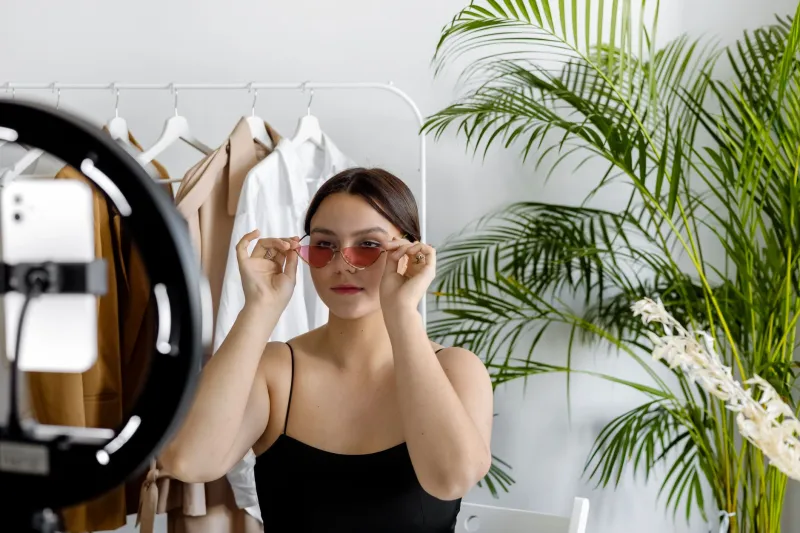
There's a creator on TikTok — you've probably seen the type — who opens every video the same way. She holds up her phone to a ring light, looks directly into the lens, and says something like, "Okay, I spent forty minutes picking this outfit to look like I just threw it on." Then she shows you the outfit. It's great. You want it. And somehow, the confession makes you want it more.
This is the new math of internet credibility, and it's got a logic that feels almost too slick to be real — which, honestly, is kind of the point.
The Old Playbook Is Officially Dead
For most of the 2010s, the influencer economy ran on a pretty straightforward lie: make it look effortless. The aspirational feed, the casually perfect kitchen, the "I woke up like this" energy — all of it was painstakingly constructed to appear like it wasn't. Audiences played along, mostly because there wasn't a better option. You either bought the fantasy or you logged off.
Then came the backlash era. Deinfluencing. Call-out culture. The slow, collective realization that everything was staged. People got tired of being sold a life that didn't exist, and the credibility of the perfectly polished creator started to crater.
But here's where it gets interesting: the response wasn't a full pivot to raw, unfiltered honesty. It was something weirder and, frankly, more sophisticated. A certain subset of creators didn't abandon the performance — they just started narrating it.
Confessing the Curation
Call it meta-transparency. The move is simple in theory: instead of pretending the artifice isn't there, you put it front and center. You tell your audience exactly how the sausage gets made. You show the ring light. You admit you re-shot the "candid" moment six times. You explain that the "honest review" was posted right after a brand gifted you three months of free product.
And somehow — somehow — people trust you more for it.
This isn't accidental. Researchers who study persuasion have known for decades that admitting a weakness or limitation before someone else points it out is one of the most effective credibility moves in existence. It's called the pratfall effect, sort of, but it goes deeper than that. When you disclose something that should undermine you, you're essentially signaling: I know what you're thinking, and I'm not scared of it. That confidence reads as honesty, even when the underlying content is still completely constructed.
Gen Z audiences, raised on a diet of media literacy discourse and algorithmic suspicion, are particularly attuned to this. They're not looking for creators who have no agenda — they know that's impossible. They're looking for creators who are honest about their agenda. Transparency about the game is the new form of playing it clean.
Style as the Test Case
Fashion content is where this dynamic is most visible right now, which is part of why it cuts so deep culturally. Style has always been a performance — that's not a criticism, it's basically the entire history of dress. But the influencer era tried to disguise that performance as personal expression, and the disguise got threadbare fast.
The creators gaining traction today in fashion spaces are the ones who've dropped the disguise entirely. They'll walk you through the construction of a "personal aesthetic" the same way a director's commentary walks you through a film. Here's the reference image I pulled. Here's the Pinterest board. Here's why I chose this silhouette for this angle of my body. Here's the brand I'm actually being paid to feature versus the one I actually bought myself.
That level of breakdown would have felt like oversharing, or even self-sabotage, five years ago. Now it's a flex. It demonstrates taste and self-awareness, which is apparently the combo younger audiences find irresistible.
There's also something genuinely democratic about it. When you show the process, you're implicitly saying: you could do this too. You're not selling an unattainable life — you're sharing a methodology. That shift from aspiration to education is massive, and it's reshaping what fashion content is even for.
The Trust Economy Has New Currency
What's really happening here is a renegotiation of what trust means in a digital context. The old model equated trust with seamlessness — if something looked polished and professional, it must be credible. That logic got exploited so aggressively that it basically inverted. Now polish is a red flag.
The new currency is legibility. Can I understand what you're doing and why? Can I trace your incentives? If yes, I can decide for myself whether to buy in. That's not the same as authenticity in any traditional sense — it's more like auditable performance. You're not pretending to be unscripted. You're just making your script visible.
This matters beyond content creation, by the way. It's showing up in how brands are being asked to communicate, how celebrities are managing public personas, how even political figures are trying to recalibrate after years of obvious spin. The meta-confession isn't a niche internet phenomenon — it's a broader cultural grammar shift in how credibility gets built.
But Is It Just a Better Con?
Obviously, there's a critique lurking here, and it's worth sitting with. If admitting you're performing becomes its own performance — and it absolutely does, the moment it becomes a strategy — then haven't we just added another layer to the same onion? The creator who confesses her curation is still, ultimately, curating. The transparency is still a product.
Yeah. It is. And the savvier audiences know that too.
But here's the thing: they don't necessarily care. The transaction has just become more honest about being a transaction. You're not being asked to believe this person is your best friend or a neutral party. You're being invited to appreciate the craft of the presentation while knowing it's a presentation. It's closer to watching a magician who explains the trick before doing it — the explanation doesn't ruin the magic, it reframes it as something you're in on.
There's a version of this that's genuinely liberating. And there's a version that's just manipulation wearing a more sophisticated disguise. The line between them is thin, and it shifts depending on who's drawing it.
What Comes Next
If the 2010s were about selling the illusion and the early 2020s were about exposing it, we're now in the era of profiting from the exposure itself. The confession is the content. The curtain pull is the show.
For creators navigating this landscape, the challenge isn't figuring out how to seem more real — it's figuring out how to be genuinely interesting while being completely transparent about the fact that you're trying to be interesting. That's a harder needle to thread than it sounds.
For audiences, the work is staying sharp enough to enjoy the performance without forgetting it's one.
And for the culture broadly? We're developing a taste for a kind of honesty that doesn't actually require truth — just the willingness to name the game. Whether that's progress or just a more elegant trap is probably something we won't know until the next backlash rolls in.