Performing Realness: Inside the Calculated Art of Seeming Unfiltered
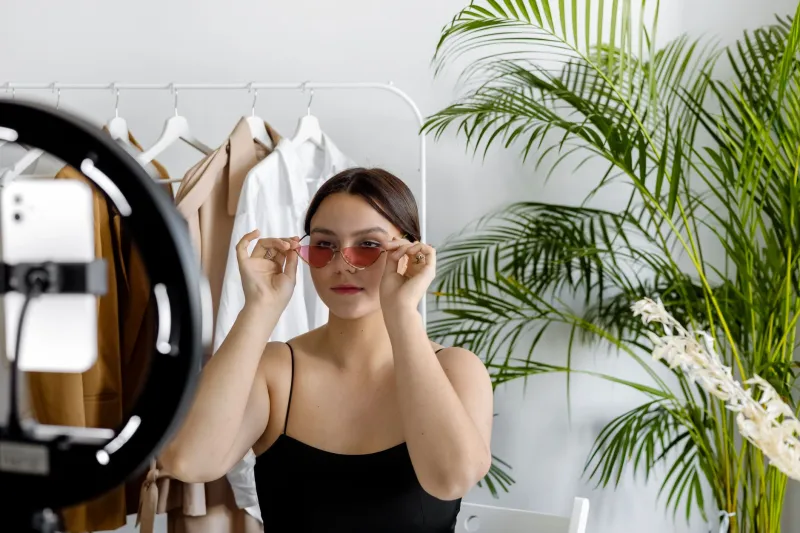
There's a creator you probably follow. She films herself crying in a car. No ring light, no branded backdrop — just dashboard light, mascara doing its thing, and a front-facing camera that looks like she grabbed her phone in a moment of weakness. The caption says something like 'didn't want to post this but you guys deserve honesty.' It has 2.4 million views.
The thing is, she posted it at 7:14 PM on a Tuesday. Peak engagement window. Every platform's algorithm knows it. She knows it too.
Welcome to the authenticity paradox — where the most carefully produced content wears the costume of raw spontaneity, and the audience, consciously or not, agrees to play along.
The New Performance Art Nobody's Calling Performance Art
We've always understood that celebrities are performing. The red carpet is theater. The magazine profile is mythology. Nobody watches a Marvel press junket and thinks they're getting unmediated access to a human soul.
But social media rewrote the contract. The promise — explicit in the platform design, in the lo-fi aesthetic, in the confessional caption — was access. Real life. The stuff that happens between the press junkets. And for a hot minute in the early 2010s, some of it actually was.
Then the money showed up.
Once creators figured out that vulnerability converted — that a shaky-cam breakdown outperformed a polished tutorial, that a 'no makeup' selfie with perfect skin drove more engagement than a glam shot — the calculus changed permanently. Rawness became a genre. Authenticity became a production value. And a new class of creator emerged: one who is completely transparent about the fact that they are performing, and uses that transparency as the ultimate authenticity move.
It's a feedback loop so elegant it's almost beautiful. Almost.
'I Know This Is Weird to Post' Is the New Sponsored Content Disclaimer
Pay attention to the language. The meta-commentary that now opens half the 'honest' content you consume: 'I debated sharing this.' 'This is vulnerable for me.' 'I'm probably going to regret posting this.'
These aren't confessions. They're framing devices. They prime you to receive what follows as unguarded, unpolished, real — while simultaneously demonstrating that the creator has enough self-awareness to acknowledge the weirdness of sharing it. You get authenticity and emotional intelligence. The package is complete.
Fashion creators have weaponized this particularly well. The 'getting dressed with no plan' video where someone pulls genuinely chaotic combinations and laughs at themselves? Filmed in three takes, edited in CapCut, styled around a piece they're being paid to feature. The 'thrift haul that went wrong' where everything looks accidentally incredible? Scouted over two weekends. The 'I wore the same outfit for a week' challenge? Coordinated with a brand whose basics happen to be the outfit in question.
None of this is secret. The creators aren't hiding it, exactly. But they're not announcing it either. They're operating in the comfortable gray zone where the feeling of authenticity is the product, regardless of what's underneath.
The Audience Isn't Being Fooled — They're Opting In
Here's where it gets genuinely interesting, and where a lot of cultural criticism gets it wrong: the audience isn't passive.
Viewers in 2024 are sophisticated in ways that would have seemed paranoid a decade ago. They know about engagement windows. They've read the think pieces. They follow the drama when a creator gets caught staging a 'candid' moment. They are, in many cases, completely aware that the crying car video was a choice.
And they watch it anyway. They comment 'this is so real, thank you for sharing.' They share it to their stories. They feel something.
This isn't delusion — it's a different kind of contract. Audiences have agreed to receive the performance as though it were genuine because the performance, executed well, delivers something emotionally true even if it's logistically constructed. It's not unlike watching a really good actor and knowing, intellectually, that they're acting, while still feeling the scene in your chest.
The problem is when that contract goes unacknowledged — when creators exploit the emotional goodwill generated by performed vulnerability for commercial gain without ever surfacing the mechanics. That's where 'authentic content strategy' slides into something more troubling.
Fashion's Specific Relationship With This Particular Lie
The fashion world has always been in the business of selling aspiration through the language of accessibility. 'Real women.' 'Effortless style.' 'I just threw this on.' These myths predate Instagram by decades — they were running in magazine spreads before most current creators were born.
What's changed is the intimacy of the medium. A magazine spread has obvious production value — the lighting, the layout, the photographer credit. The distance is built in. But a vertical video shot on an iPhone, with ambient noise and a creator talking directly into the lens, collapses that distance almost completely. The parasocial relationship it builds is orders of magnitude more intense than anything a glossy could generate.
That intensity is exactly why the stakes of the authenticity performance are higher in this space. When a creator you feel like you know turns out to have been staging every 'spontaneous' outfit moment, the betrayal lands differently than learning a magazine cover was retouched. It feels personal. Because the whole pitch was personal.
Some creators are navigating this thoughtfully — explicitly naming their process, showing the work, making the artifice part of the content rather than something to be concealed. There's a growing cohort of fashion voices who'll walk you through the fact that they spent four hours constructing what looks like a casual lewk, and frame that labor as its own kind of interesting story. That's a genuinely different move. It's performance, yes, but it's performance about performance — which at least has the virtue of not pretending otherwise.
So Is Any of It Real?
Probably. Some of it. The emotion, if not the circumstance. The opinion, if not the spontaneity. The aesthetic sensibility, even if the 'impulsive' purchase was gifted three weeks ago.
The more useful question might be: does it matter? And the answer to that depends entirely on what you came for.
If you're watching for connection — for the feeling that someone else is living a life that resembles yours, struggling with the same questions, finding joy in the same weird corners of culture — then a well-executed authenticity performance can deliver that, even knowing what it is. Art does this all the time. We don't dismiss a song because the artist refined it through forty drafts.
But if you're making purchasing decisions, forming opinions, or — more critically — internalizing someone else's performed ease as a benchmark for your own messy, unscripted existence, then the calculation shifts. Then the seams matter. Then the 7:14 PM timestamp on the crying video starts to feel less like a coincidence and more like a question worth asking.
The most radical thing a creator could do right now isn't to perform authenticity more convincingly. It's to stop pretending the performance isn't happening — and trust that the audience is smart enough to find that interesting too.
Some of them already are. The rest of us are still watching the car video, feeling something, and deciding what to do with that.