Try-Hard Is Dead. Long Live the Art of Not Trying.
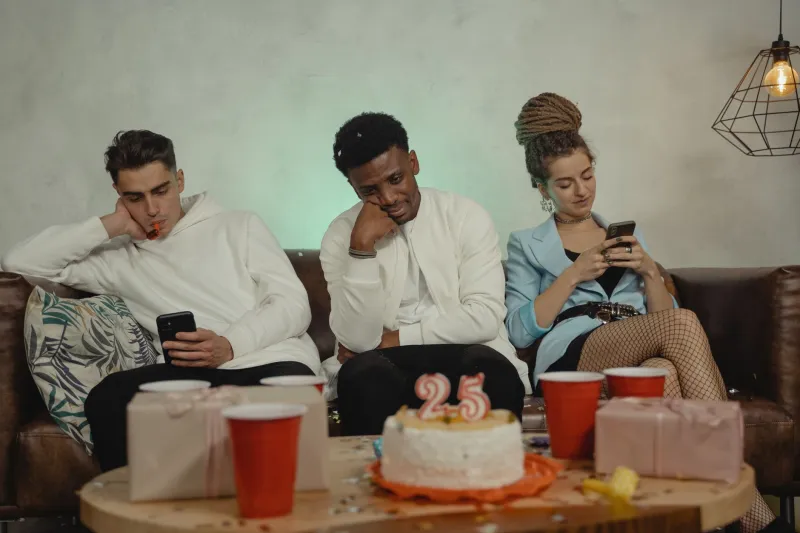
There's a specific kind of person you've seen at every gallery opening, rooftop party, and overpriced brunch spot in every major American city. They look like they rolled out of bed, grabbed whatever was closest, and wandered in off the street. The jeans are slightly too big. The shirt is slightly too wrinkled. The expression is slightly too bored. And somehow — somehow — the whole thing costs more than your rent.
Welcome to the age of curated apathy, where the most expensive thing you can project is the convincing illusion that you're not projecting anything at all.
The Look That Isn't Trying (Except It Absolutely Is)
Let's be precise about what we're talking about, because there's a meaningful difference between actually not caring and performing not caring for an audience. The latter is what's eating culture right now.
The aesthetic has a few reliable tells. Oversized vintage pieces that fit just wrong enough to feel intentional. Minimal social media presence, but every post is immaculate. A music taste that's either embarrassingly obscure or deliberately lowbrow — think hyperpop or classic country, nothing that reads as effort. An apartment that looks sparse but contains one piece of furniture that costs more than a semester of community college. The whole vibe communicates the same thing: I exist above the anxiety of impressing you.
Except, of course, they don't. The studied nonchalance is the impression. The disinterest is the product.
This isn't new as a concept — cool has always been partly about withholding — but what's shifted is how fully it's been systematized, commodified, and class-coded. Apathy used to be rebellion. Now it's a luxury good.
How Indifference Got Expensive
Trace the lineage and you hit a few cultural inflection points. Grunge borrowed its aesthetic from poverty and turned it into a statement. Normcore in the early 2010s deliberately drained clothing of personality. Quiet luxury, which dominated fashion conversation a couple years back, stripped away logos in favor of the kind of understatement that only reads as expensive if you already know what expensive looks like.
Each of these movements shared a central tension: they were countercultural gestures that got absorbed, almost immediately, into the very systems they were pushing against. By the time Normcore hit the mainstream press, people were buying $300 New Balance sneakers to participate in an aesthetic about not participating. Quiet luxury became a TikTok trend, which is about as far from quiet as you can get.
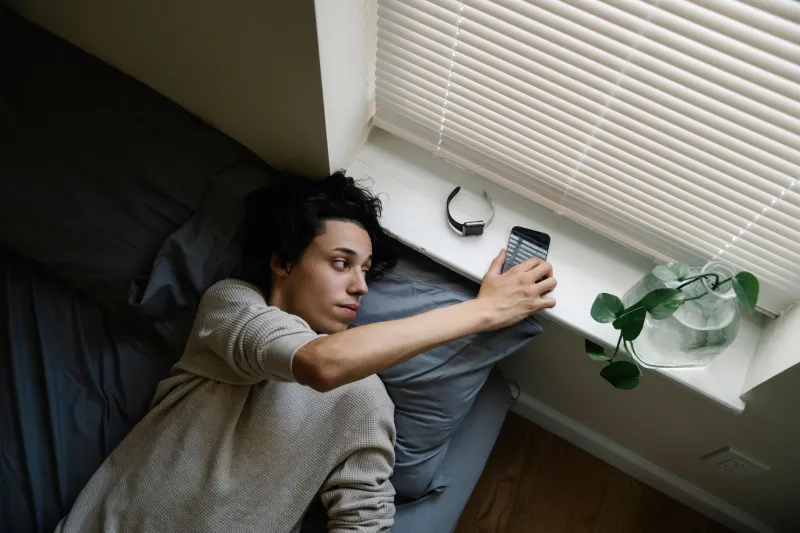
What's happening now is a further refinement of that cycle. The apathy aesthetic isn't just about clothes — it's a full lifestyle posture. It includes how you talk (understated, a little dry), what you consume (nothing too popular, nothing too obscure), and crucially, how you interact with digital culture. The truly cool, we're told, aren't chasing the algorithm. They're barely on their phones. They let the phone come to them.
This is, obviously, insane. But it's also working.
The Paradox at the Center of the Feed
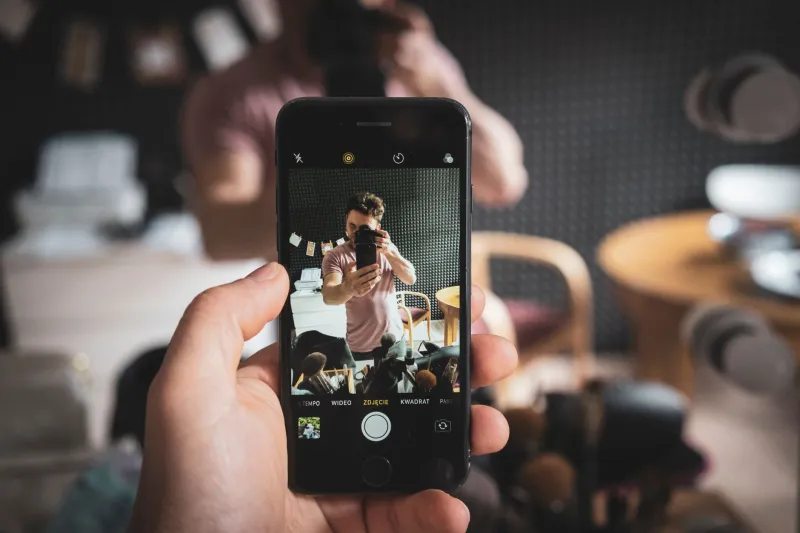
Here's where the whole thing starts to eat itself. The platforms that should be incompatible with apathy — Instagram, TikTok — have become the primary stages for its performance. There are entire content ecosystems built around demonstrating how little the creator cares about content ecosystems. The "I just threw this on" fit check. The "I barely use this app" pinned post. The aesthetic of digital minimalism, carefully documented.
And the audience eats it up, because the performance is genuinely skilled. It takes real creative intelligence to construct an image of effortlessness that actually holds together. The lighting has to be bad in the right way. The caption has to be either too short or too weird. The timing of the post has to feel accidental even if it was scheduled.
This is craft. Strange, slightly exhausting craft — but craft nonetheless.
What makes it a class signal is the resources required to pull it off convincingly. You need enough financial security to actually not stress about the things you're pretending not to stress about. You need social capital built up over time so that your indifference reads as confidence rather than disconnection. You need access to the right thrift stores, the right friends, the right neighborhoods. The aesthetic of not caring is, paradoxically, one of the most resource-intensive looks available.
Who Gets to Look Unbothered
This is where the cultural commentary has to get a little uncomfortable, because the freedom to perform apathy is not equally distributed.
For certain communities — particularly Black and brown Americans — projecting disinterest or disengagement has historically carried real social risk. The luxury of looking unbothered, of moving through spaces with deliberate casualness, has always been more available to people who don't have to calculate the cost of being misread. The apathy aesthetic, as it's currently trending, is largely a white, upper-middle-class performance. The kids who originated many of its raw materials — the fashion codes, the musical references, the street-level cool — often don't make it into the glossy version.
That's not incidental. It's structural. And it's worth naming while we're examining why this particular aesthetic landed where it did and for whom.
The Exit Ramp Nobody's Taking
Here's the honest truth about curated apathy: it's a feedback loop with no obvious exit. Once you've built an identity around not caring, caring about anything becomes a kind of self-betrayal. Enthusiasm becomes embarrassing. Ambition becomes gauche. You're trapped performing a version of yourself that can never be visibly excited, never be openly vulnerable, never admit that something actually matters.
That's a rough way to live. And increasingly, there are signs of a counter-reaction forming — a genuine hunger for sincerity, for people who will just say what they mean and mean what they say, even if it's awkward, even if it's a little too much.
But right now, in this particular cultural moment, the room still belongs to the person in the wrinkled shirt who looks like they couldn't care less that you noticed.
They noticed. They always notice.
They just practiced not showing it until the practice became invisible — and that invisibility became the whole point.