The Goodbye Post Is the Point: How Logging Off Became the Ultimate Power Move
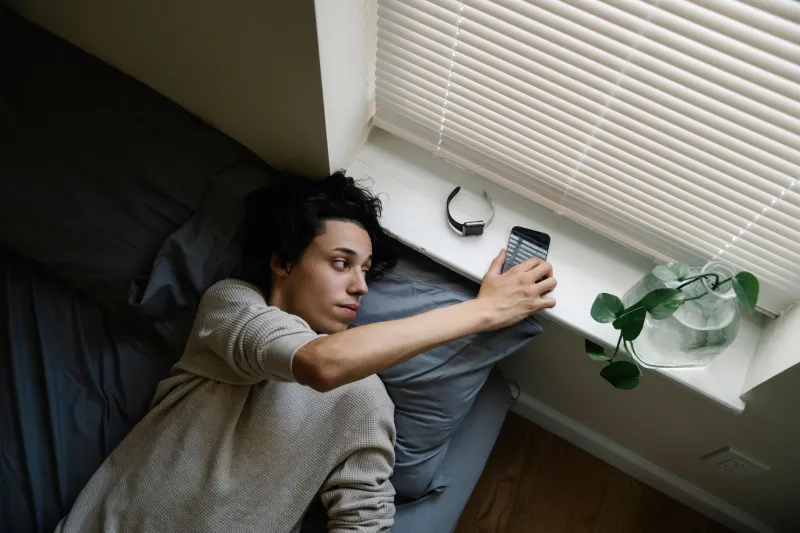
There's a specific kind of post you've definitely seen at least three times this year. It goes something like this: a slightly grainy, intentionally imperfect photo — maybe a hand holding a coffee cup near a window, or a blurred tree line — accompanied by a caption that runs somewhere between 400 and 800 words. It talks about presence. About reclaiming attention. About how the feed was stealing something irreplaceable. It ends with a version of: I'll be stepping back from this space for a while. Take care of yourselves.
And then, right on cue, it gets two thousand likes.
Welcome to the silence industrial complex — where opting out has become its own elaborate form of opting in, and where the most aestheticized thing you can do with your digital identity right now is perform the act of abandoning it.
The Departure as Aesthetic
Let's be honest about what's actually happening here. Announcing your exit from social media on social media isn't a contradiction that people are blind to — it's a contradiction that people have fully embraced and dressed up in linen. The farewell post has evolved into a legitimate genre, complete with its own visual grammar: desaturated tones, handwritten fonts, references to slowness, and at least one allusion to nature as the antidote to screens.
This isn't accidental. It's fashion. Not fashion in the narrow sense of clothes and runways, but fashion in the way Kurtural means it — a cultural signal system, a set of choices that communicates who you are and where you stand. And right now, the statement piece isn't a bag or a sneaker. It's the public renunciation of your own digital footprint.
The irony isn't lost on anyone. That's actually the point. The knowing wink embedded in the goodbye post is part of its appeal — it signals self-awareness while still indulging in the performance. I know this is a little absurd, the subtext reads. That's what makes it interesting.
Offline as Luxury Good
Here's where it gets genuinely complicated. Stepping back from digital life — really doing it, not just announcing it — is increasingly a privilege. The people who can actually sustain an offline existence without professional or social consequence tend to be people with a certain amount of economic insulation. Freelancers with established client bases. Artists with gallery representation. Anyone whose livelihood doesn't depend on maintaining a visible, active presence on platforms that have quietly become infrastructure.
For a lot of people in the US — gig workers, small business owners, anyone building something from scratch — going dark isn't a spiritual cleanse. It's a career risk. The algorithm doesn't pause while you rediscover yourself. It just stops showing you to people.
So when someone with 80,000 followers posts about the liberation of logging off, there's a class dimension worth naming. The ability to disappear is, paradoxically, something only the very visible can afford. Obscurity as luxury. Silence as status. The less you need the platform, the more meaningful your departure from it becomes — and the more cultural cachet you accumulate for leaving.
The Monetization Was Inevitable
If you needed proof that the anti-algorithm aesthetic has been fully absorbed by the machine it claims to resist, look at what happened next. The people who left came back — often with a podcast, a newsletter, a Substack, or a brand deal with a company that sells blue-light glasses or analog planners. The departure narrative became a content arc. The silence was a season finale, not an ending.
This isn't cynicism for its own sake. Some of those newsletters are genuinely good. Some of those creators did something real with their time away. But the pattern is hard to ignore: logging off became a narrative beat in an ongoing content strategy, and the I'm finally free post turned out to be more of a stay tuned than a goodbye.
Brands caught on fast. The wellness-adjacent, slow-living, analog-everything aesthetic that surrounds the digital detox moment is now a full product category. Moleskine notebooks. Film cameras. Apps — and yes, the irony of a digital app selling you on digital minimalism is a joke that writes itself — designed to limit your screen time. The resistance got a retail wing.
What Real Resistance Actually Looks Like
None of this means that people who feel burned out by social media are wrong to want out. The exhaustion is real. The attention economy genuinely does extract something from people, and the desire to reclaim focus, privacy, and some version of a life that isn't mediated by engagement metrics is completely legitimate.
But there's a difference between leaving and performing leaving. And the cultural moment we're in has gotten very good at collapsing that distinction.
Real resistance — if that's even the right word — tends to be quieter and less photogenic. It looks like someone who just... stops posting, without explanation. No manifesto. No countdown. No aestheticized image of a hand releasing a phone into soft morning light. Just an account that goes still, and a person who moved on without needing you to know about it.
That version doesn't generate content. It doesn't build a personal brand around its own absence. It doesn't come with a capsule wardrobe of earth tones and a recommendation for a particular brand of herbal tea. It's just a person who decided something privately and acted on it.
Which is, of course, the one thing the silence industrial complex genuinely cannot sell you.
The Takeaway Nobody Wants to Hear
The goodbye post isn't going anywhere. It's too useful, too resonant, too perfectly calibrated to the current cultural mood to disappear. If anything, it'll evolve — get more elaborate, more self-referential, more knowing. Someone will eventually post a goodbye post that's explicitly about goodbye posts, and it will do numbers, and the cycle will complete itself in a way that's almost beautiful in its absurdity.
What's worth holding onto, underneath all of this, is the genuine question that the performance keeps almost asking: what does it actually mean to have a relationship with your own attention? Not as a brand moment. Not as a content arc. Just as a private, ongoing negotiation with how you spend your time and what you let into your head.
That question doesn't need an audience. And the fact that we keep trying to give it one says more about where we are right now than any goodbye post ever could.