Proudly Terrible: The Artists Making a Manifesto Out of Getting It Wrong
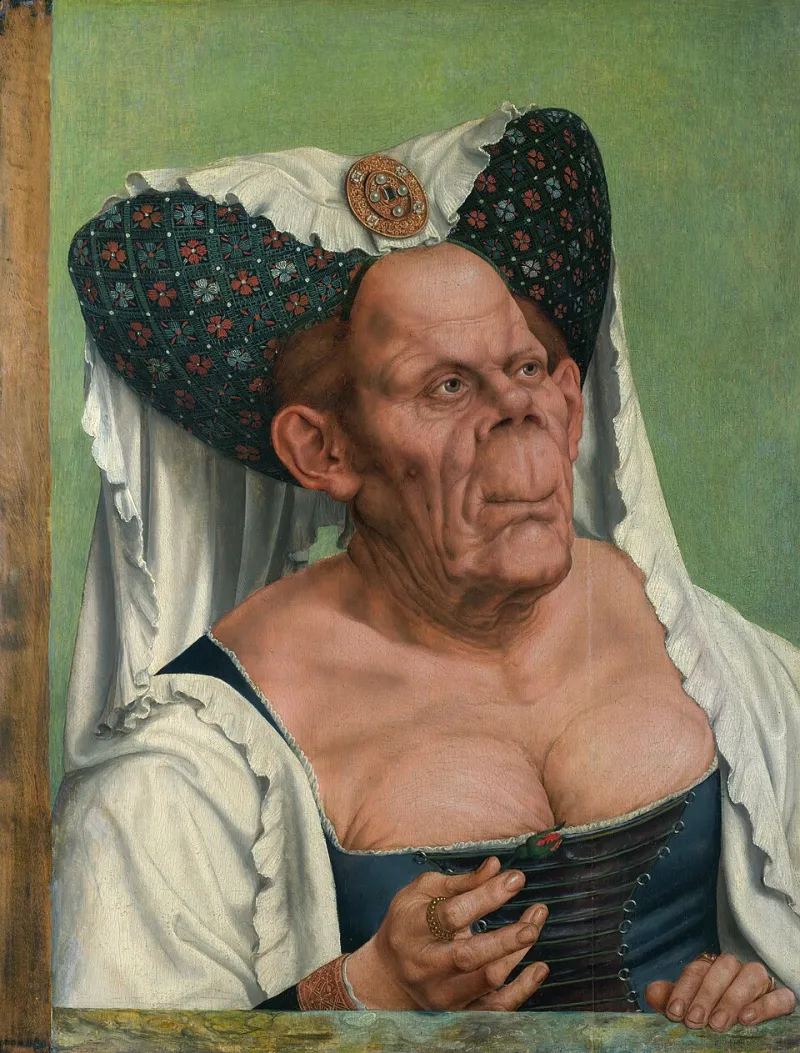
Photo: Quinten Metsys, Public domain, via Wikimedia Commons
Let's start with a song that sounds like it was recorded inside a cardboard box during a minor earthquake. The vocals are slightly off-pitch. The guitar comes in a half-beat late. There's an audible sneeze somewhere around the two-minute mark that nobody edited out. It has 340,000 plays on Spotify.
This is not an accident. None of it is.
Across music, visual art, design, and even fashion, there's a growing contingent of creators who are making a deliberate, principled choice to be bad at things — or at least to look that way. They're calling it slow art, lo-fi aesthetics, raw process work, anti-polish. Whatever the label, the core move is the same: refusing the pressure to appear masterful, and building something out of the refusal.
It's worth asking whether that's radical or just another performance. The answer, inconveniently, seems to be both.
Where This Comes From
The appetite for imperfection isn't new. Punk built a religion out of three chords and a sneer. The Velvet Underground made beautiful music that sounded like it was falling apart. Daniel Johnston recorded some of the most emotionally devastating songs of the 20th century on a Fisher-Price tape recorder. The lo-fi tradition runs deep.
But the current moment feels different in a specific way. Previous generations of deliberately rough artists were often rough out of necessity — limited resources, limited access, limited equipment. The rawness was real. What's happening now is something more self-conscious: creators with access to professional tools, professional spaces, professional networks, choosing to make work that looks like they have none of those things.
That choice is doing a lot of cultural work.
"I have a decent microphone. I have mixing software. I know how to use it," says Marcus, a 26-year-old indie musician based in Philadelphia who releases music under the name Static Lemon. "I just don't want to. The clean version sounds like everybody else. The messy version sounds like me."
The Perfectionism Hangover
To understand why imperfection has become a statement, you have to understand what it's reacting against.
The 2010s gave us an era of unprecedented aesthetic polish. Instagram flattened visual culture into a glossy, well-lit, perfectly composed sameness. Music production became so clean and precise that individual tracks started to feel indistinguishable from one another. Design followed the same trajectory — minimal, sleek, optimized, frictionless. Everything was beautiful. Everything was exhausting.
The pressure wasn't just on professionals. Social media democratized the demand for polish. Suddenly everyone was expected to maintain a curated, camera-ready version of their creative output, their personal brand, their entire life. The cost of looking unfinished went up. The reward for looking perfect went up faster.
The slow art movement is, at its core, a hangover cure. It's the creative equivalent of canceling plans and staying in your pajamas — not because you can't show up, but because the performance of showing up has become its own kind of sickness.
The Mastery Question
Here's the tension that critics of this movement like to poke at: is it really brave to make bad work when you could make good work? Isn't there something slightly dishonest about an MFA graduate making deliberately naive-looking paintings and presenting them as anti-establishment?
It's a fair question. There's a long history of trained artists performing ignorance — naive art as a studied aesthetic choice — and the line between homage and condescension toward actual amateur creators can get blurry fast.
But the more interesting artists in this space aren't really pretending to be unskilled. They're doing something more specific: they're refusing to let skill become a wall between themselves and the work. They're resisting the way technical mastery can calcify into habit, into safety, into the production of technically correct but emotionally inert objects.
Painter and printmaker Deja Okafor, 28, based in Chicago, puts it this way: "I know how to make something that looks finished. I've done it. It feels like lying. The unfinished thing is where the actual thought is. The finished thing is just the part where I stopped thinking and started decorating."
That's not anti-skill. That's a specific argument about where skill stops being useful.
The Performance Problem
And yet. The internet being what it is, imperfection has already been aestheticized, packaged, and sold back to us in a dozen different forms. Lo-fi hip hop playlists have millions of subscribers. The "raw" aesthetic has its own filter packs. Brands are paying influencers to make content that looks spontaneous and unpolished while following a detailed brief.
When imperfection becomes a trend, it stops being a rebellion. It becomes a costume.
The most honest creators in this space seem to know this, and it makes them anxious. The goal was to escape the optimization machine, not to feed it new content. But the machine is adaptive. It learned to monetize authenticity years ago. It can definitely learn to monetize mess.
This is the central paradox of the slow art movement: the moment it becomes legible as a movement, it starts to lose the thing that made it interesting. The whole point was to make work that resisted easy categorization and consumption. A named aesthetic is, by definition, categorized and consumable.
What Survives the Paradox
Here's what still feels true, despite all of that: there is genuine creative liberation available in letting yourself be bad at something. Not performed badness. Not strategic roughness. Actual, unguarded willingness to make something that might not work.
The artists who are doing this most honestly aren't making a statement about imperfection. They're making work, and the imperfection is just the residue of making it without a safety net. The sneeze stays in the recording because removing it would mean spending another hour in front of a screen instead of making the next song.
Slow art, at its best, isn't about the output. It's about recovering a relationship with process that the optimization era tried to kill — the part where you don't know if it's good yet, and you keep going anyway.
That's not a manifesto. It's just how making things used to feel before we started performing the making of things.
Maybe that's enough.