Borrowed, Broken, and Built Back Better: How Gen Z Remixed Their Parents' Culture Wars Into Something Unrecognizable
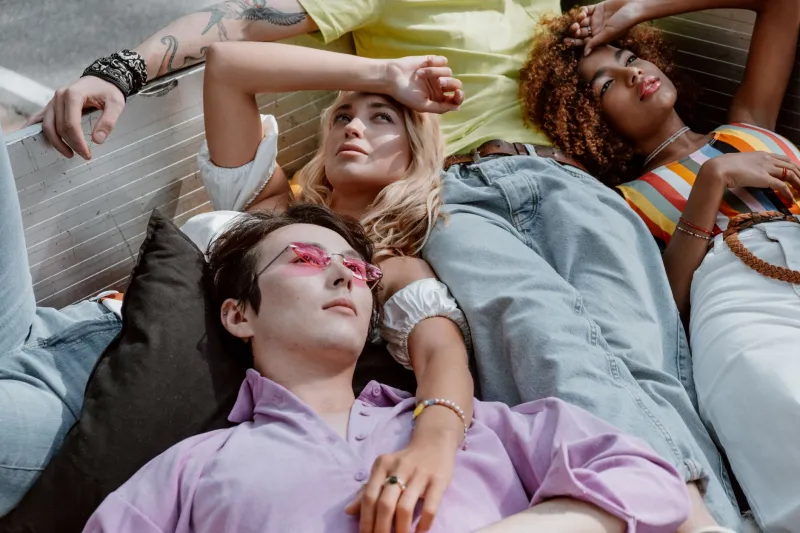
There's a specific kind of vertigo that hits a certain generation of Americans when they scroll TikTok right now. It's the sensation of watching something deeply familiar get completely disassembled, rearranged, and handed back to you like a stranger's face wearing your grandmother's earrings. The music, the fashion, the fights — all of it is there. None of it means what it used to.
Gen Z didn't grow up in the culture wars their parents waged. They grew up around them, absorbing the aesthetic residue without necessarily carrying the emotional weight. And that distance — generational, psychological, chronological — turns out to be the most powerful creative tool in the room.
The Sample Flip: When Context Gets Left on the Cutting Room Floor
In music production, a sample flip is when you take a recognizable piece of audio — a hook, a drum break, a vocal run — and transform it so completely that it becomes the foundation of something new. The source material is still technically there, but the meaning has shifted. The emotion has been rerouted.
That's exactly what Gen Z is doing to inherited cultural tension.
Take the Nirvana-vs.-pop debate that defined the early 90s, a genuine ideological trench war between people who believed commercial music was a moral failing and people who just wanted to dance. Today, that conflict is a costume. You'll find kids on the internet who have absorbed both Nevermind and the Spice Girls catalog with equal reverence, mixing grunge-adjacent aesthetics with unironic bubblegum energy, and feeling absolutely no contradiction. The original combatants would be baffled. The kids doing it don't care, and that indifference isn't apathy — it's a creative decision.
What gets preserved in this remix process is usually the texture of a cultural moment: the silhouette of a jacket, the cadence of a vocal style, the palette of a specific era's graphic design. What gets abandoned, almost universally, is the original grievance. Gen Z will wear a band tee for an artist they've never heard because the logo is aesthetically interesting. They'll pull from the visual language of a political movement without signing up for its original ideological commitments. It sounds like theft. It's actually closer to translation.
The Irony Layer Is Thinner Than You Think
Here's where it gets complicated, though. There's a temptation — especially among older critics — to write all of this off as ironic detachment. The argument goes: these kids don't actually care about the things they're referencing, they're just mining the past for clout, and the result is a culture that's all surface and no soul.
That argument is mostly wrong, and it misunderstands what irony is doing in this context.
When a 21-year-old in 2024 commits hard to an early-2000s emo aesthetic, there's irony present, sure — a knowing wink at the melodrama, the Hot Topic energy, the LiveJournal confessionalism. But underneath that wink is something genuinely felt. The emotional vocabulary of that era — the outsider identity, the performed suffering, the desperate sincerity — resonates for real reasons. The world is still producing kids who feel like they don't fit. The remix isn't mockery. It's recognition with a raised eyebrow.
The same goes for the way Gen Z has absorbed and redeployed the visual language of 80s and 90s identity politics. Queer aesthetics from the ACT UP era, feminist iconography from the riot grrrl movement, the graphic urgency of hip-hop's golden age — all of it has been lifted, remixed, and recontextualized. Sometimes that process strips away meaning. But often it amplifies it, dragging something that was buried in a specific historical moment back into the light and making it legible to a new audience.
What Gets Flipped
The most interesting part of the remix is what actually gets inverted — the moments where Gen Z doesn't just absorb a cultural artifact but actively reverses its original charge.
Consider masculinity. The particular brand of 90s male identity that dominated pop culture — the hyper-aggressive, emotionally sealed, physically dominant archetype that showed up everywhere from action movies to rap beef to the WWF — is having a strange afterlife. Gen Z men are engaging with that aesthetic but frequently undermining it from the inside, wearing the aesthetic of toughness while openly discussing mental health, vulnerability, and emotional complexity. The visual language of that era's masculinity is present; the actual ideology is being quietly gutted.
Or look at what's happened to the 80s "greed is good" visual register. The power suit, the Wall Street excess, the shoulder pads and slicked hair — it keeps showing up in fashion cycles, but it arrives now as a kind of knowing drag performance rather than a genuine aspiration. The look has been separated from the value system. Whether that separation is meaningful or just aesthetic is a legitimate debate, but the flip is real.
The Creative Stakes of Getting It Wrong
None of this is without risk. When you strip context from a cultural moment and rebuild it as aesthetic, you can lose something critical — the specific pain that produced it, the political urgency that made it matter, the people whose survival it represented.
The remix culture Gen Z is operating in has real casualties. Borrowing from Black musical and fashion traditions without crediting or compensating the originators is a pattern as old as American pop culture, and it doesn't get more forgivable just because it's being done by a generation that posts about social justice. Pulling from the visual language of queer liberation while treating it as a trend rather than a living movement is a genuine problem, not just an aesthetic misstep.
The best practitioners of this cultural remixing seem to understand this. They're not just looting — they're in conversation with the source material, crediting it, learning its actual history, and making creative choices that honor the complexity of where something came from even while taking it somewhere new.
The Track Is Still Playing
What makes this moment genuinely exciting, from a cultural standpoint, is that the remix isn't finished. The source material keeps expanding — the early 2000s internet era, the post-9/11 cultural freeze, the mid-2010s social media explosion — and each new layer of recent history becomes available for this kind of creative deconstruction.
Gen Z didn't start the culture wars their parents fought. They inherited a landscape scarred by those conflicts and decided to do something stranger and more interesting than continuing them: they turned the whole battlefield into raw material.
The result isn't always coherent. It isn't always respectful. But it's alive in a way that most nostalgia-driven cultural production isn't, because it's not trying to recreate the past — it's trying to figure out what the past actually means when you hold it up to the present and let the light come through.
That's not detachment. That's the deepest kind of engagement there is.