The Most Trusted Face in America Works the 6 and the 11
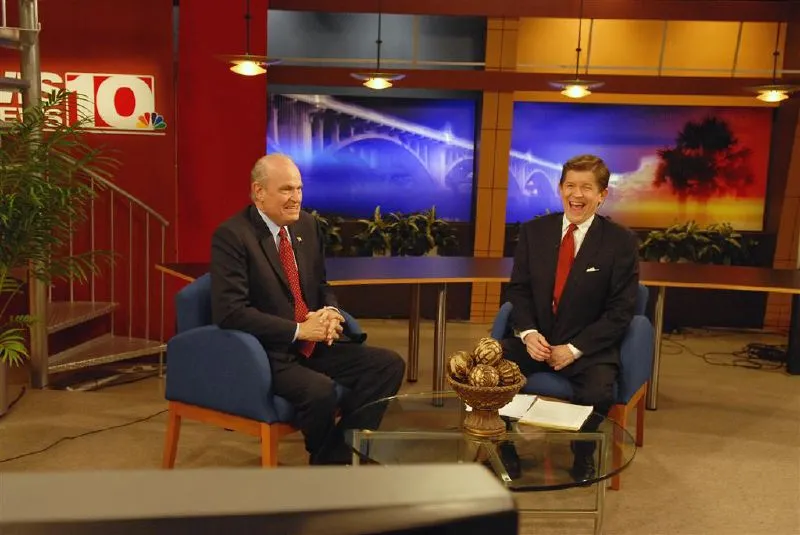
Photo: freddthompson, CC BY-SA 2.0, via Wikimedia Commons
There is a man in a mid-size Southern market who has worn the same shade of forest green on air for something like nine years, and there is a Facebook group with 40,000 members devoted to cataloging it. He did not ask for this. He is aware of it. He has, on camera, thanked the group by name.
If you want to find the most genuinely beloved visual artist-on-a-screen working in America right now, don't look at the streaming charts. Look at market 42. Look at the 6 p.m. broadcast and the person reading the school board update with the exact same cadence as the house fire.
The 6 and 11 Club
Local news is one of the last mass formats built on repetition. Same desk, same music cue, same person, 300 nights a year. That used to be the definition of square. In a feed where every creator is constantly repositioning to stay in front of the algorithm, it has become the most legible form of authenticity we have left.
The anchors going viral are rarely the polished ones. They're the deadpan read of something absurd. The unscripted eyebrow. The wardrobe choice that suggests a human being chose it in a bedroom at 4 a.m. — because they did. Viewers clip it, and the clip travels, and suddenly somebody who has spent a career being locally recognized is being recognized globally by people who don't know what state she's in.
Consistency as a Genre
Read that as an art practice and it gets interesting. A nightly broadcast is a durational performance. Same frame, same lighting, same blocking, 900-odd episodes. The variance is entirely in the face and the clothes. That's a brutal constraint, and the people who are good at it are doing something genuinely difficult: making a small, human gesture read as enormous, because it's the only thing that moved.
Fashion people clocked this before anyone else. The anchor blazer is now a reference point — the shoulder, the jewel tone, the fact that it's structured to survive a compressed stream and a 720p resolution. There are creators doing full breakdowns of local-market wardrobes with the same earnestness as a runway review. It's not ironic. Or it starts ironic and stops being ironic around the third paragraph, which is how most genuine taste formation works now.
The Micro-Celebrity Economy
And then there's the money, which is the part nobody in the anchor chair was trained for. Stations are quietly waking up to the fact that their on-air talent has a personal audience with a direct line to commerce — and that the ethics handbook was written for a world where the only thing you sold was a car dealership remote.
You've got viewer groups claiming the wardrobe the way sports fans claim a jersey. You've got affiliate links showing up in fan-run spaces, which raises the question of who's actually monetizing whom. And you've got anchors navigating a weird new terrain where being liked online can be a liability with management and an asset with the audience at the same time.
Why Deadpan Beats Polished
The deeper draw is tonal. Everything else on your phone is performing enthusiasm at you — the voice, the caption, the sponsored pivot, the forced delight. A local anchor reading a water main break in a flat, unhurried voice is not asking you to feel anything. That restraint reads, in 2026, like integrity. It's the same instinct that's driving people toward longer songs, slower edits, and anything that looks like it wasn't optimized.
Whether that's fair is another question. These are working journalists in a contracting industry, not content. But the audience has decided, and the audience's tools are clips and group chats and a very long-running joke about a green jacket.
So the next time a local broadcast clip lands in your feed and you watch the whole thing — the whole thing, not the ten seconds — notice what's happening. You're not laughing at it. You're resting in it. Somebody shows up, same time, same desk, and does the job without asking you to like, comment, and subscribe. In a culture that has turned every face into a funnel, that's not small. That's the rarest thing on the screen.